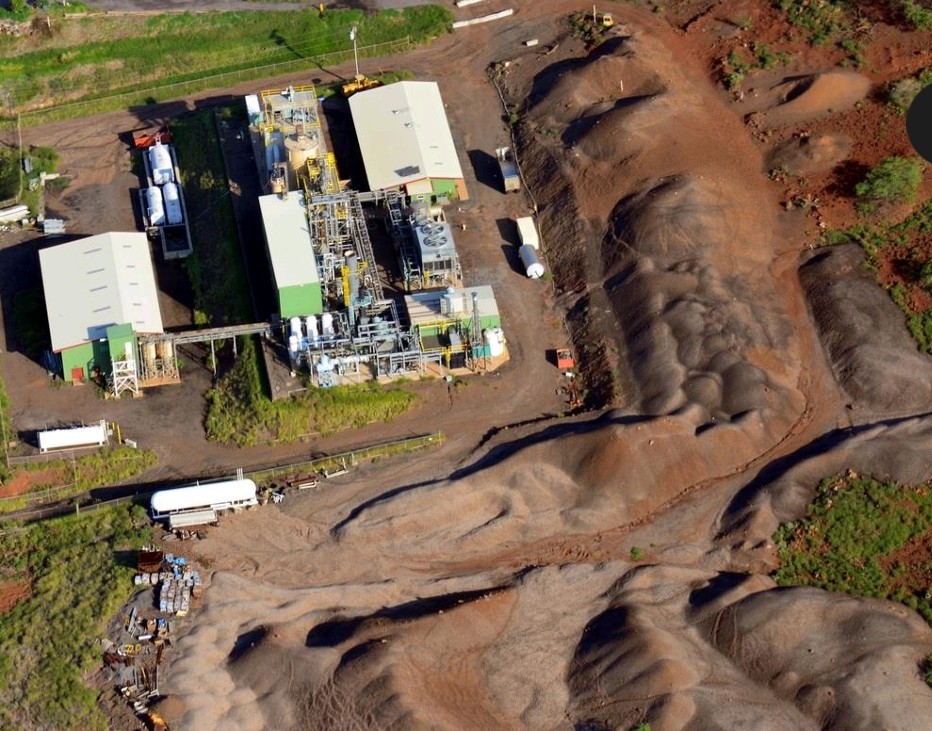
Aerial view of the Kawaihae industrial harbor facility at dusk on the Kohala coast

Kawaihae · Hawaiʻi Island

Integrated Campus & Sustainable Infrastructure Framework

Six interdependent pillars operating as one industrial ecology at the deep-draft harbor: hydrogen fuel, cogeneration, post-combustion carbon recovery, biochar, engineered wood products from plantation eucalyptus, and Mandeville Modular's 60,000 sq ft modular manufacturing plant.

HydrogenCogenerationCO₂ RecoveryBiocharVeneer & PlywoodModular Manufacturing

01 — Framing

The integration thesis

Each of these businesses can stand alone. None of them is as strong alone. The value of the Kawaihae campus is that the waste stream of every pillar is the feedstock of another — heat, fiber, carbon and logistics circulate inside the fenceline instead of leaving it as cost.

This framework treats the site as a single system with four circulating loops, six operating pillars, a phased build sequence, and one shared governance and measurement layer. Decisions are evaluated against the whole campus, not against a single P&L.

The governing principle: nothing leaves the campus as waste that could leave it as product, energy, or stored carbon.

02 — Tenants & energy sovereignty

Five standalone businesses, one carbon kuleana

All 4.2 MW of firm power from the cogeneration site is used amongst the tenants. No energy is supplied to the grid. This project highlights energy sovereignty for the DHHL industrial zone at Kawaihae. Each of the five tenants operates as a standalone business, while every effort to pool energy and waste is made circular to the sustainable infrastructure campus.

The energy sovereignty initiative is the foundation for the collective “carbon kuleana” — a shared responsibility, held together by these five businesses, to keep the carbon, fiber and energy of this place in service to this place.

DIBS Hawaii

DHHL master lessee · CCUS and dry ice

Master lessee of the DHHL industrial parcel and operator of carbon capture, storage and utilization on campus — LCO₂ purification, bulk storage, ISO container filling and high-density dry ice pellet production with revert recovery on the pelletizer. Non-dry-ice volume serves greenhouse agriculture as aqueous CO₂; no beverage-grade offtake.

dibshawaii.com
AgEnergy Hawaiʻi

Primary anchor tenant · biochar, soil amendments and pyrolysis co-products

Primary anchor tenant, operating existing equipment and reactors and drawing on an existing 15,000-ton macadamia nut shell feedstock already on site. Premier biochar comes from Hamakua Macadamia Nut Company shell waste. Macadamia shell pyrolysis oils are further processed into wood vinegar and liquid smoke for nursery operations, plus a biodiesel cut blended with diesel at the cogen. AgEnergy also processes debarked woodchip from smaller logs — the same quality and specification stream Hawaii Hardwoods uses — creating a sustainable biochar supply returned to the forest.

agenergyhawaii.com

Mandeville Modular

Steel-frame modular buildings and housing units

Manufacturing buildings and modular units in a 60,000 sq ft plant on campus, specializing in steel-frame construction to address quality affordable building for Hawaiʻi. Campus engineered wood from Hawaii Hardwoods is a potential value-added resource in their module packages.

mandevillemodular.com

Hawaii Hardwoods

Plantation forestry, veneer and premium plywood

Operates the plantation eucalyptus harvesting and logging operation and the engineered wood products facility. Its primary product offering is plantation eucalyptus veneer for a premium plywood supply for the islands, with engineered wood as a value-added component to Mandeville Modular's steel-frame modules and fiber residuals routed to AgEnergy Hawaiʻi.

NAER Inc

Energy partner · cogeneration and on-demand hydrogen

Operates the 4.2 MW cogeneration facility and partners with DIBS Hawaii on post-combustion CO₂ recovery. NAER integrates its novel Nova H2 on-demand hydrogen supply technology, blended with diesel to lower energy costs and cut the carbon intensity of campus power.

naer-inc.com

Power balance

4.2 MW generated · 4.2 MW consumed on campus · 0 MW exported. Load is allocated between tenants under a shared behind-the-meter agreement, with waste heat and waste streams pooled across the fenceline.

03 — Operating pillars

Six pillars, one fenceline

01

Hydrogen Fuel Supply

On-demand hydrogen, blended with diesel

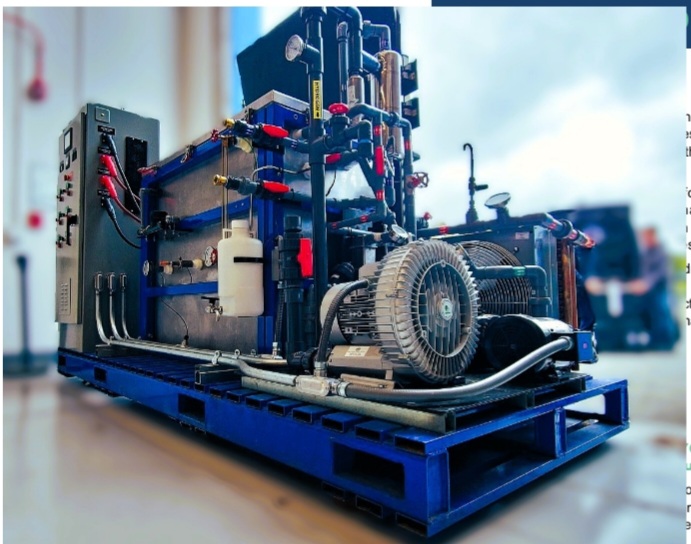
NAER Inc's Nova H2 system generates hydrogen on demand at the point of use — no large-scale storage inventory to manage. The hydrogen is blended with diesel in the cogeneration units to lower fuel burn and energy cost per kWh while supporting a broader decarbonization effort across the campus.

  • On-demand generation sized to real-time engine duty, not average load
  • Hydrogen–diesel blending at the genset for lower fuel cost per kWh
  • Reduced particulate and carbon intensity of the combustion stream
  • Blend ratio scales as the campus decarbonization roadmap advances
NAER Inc Nova H2 skid-mounted on-demand hydrogen generation system on a blue steel pallet frame
NAER Inc Nova H2 — skid-mounted on-demand hydrogen generation, sized to engine duty and blended with diesel at the genset.
02

Cogeneration Power Station

Thermal and electrical anchor — behind the fence

The cogen station is the hub of the campus. All 4.2 MW of firm power is consumed by the five campus tenants — none of it is exported to the utility grid. Its exhaust and jacket heat become the process energy every other tenant depends on. This is energy sovereignty for a DHHL industrial zone.

  • 4.2 MW firm, dispatchable power — 100% consumed behind the fenceline
  • No grid export; the campus is its own balancing authority
  • High-grade exhaust heat → EWP kilns and press platens
  • Low-grade heat → biomass drying and CO2 solvent regeneration
  • Single point of emissions control, simplifying capture economics
03

Post-Combustion CO₂ Recovery

Carbon management layer

A post-combustion capture train on the cogen flue gas turns the campus's largest emissions point into a merchant product stream. Steam for solvent regeneration is drawn from the same cogen cycle it cleans.

  • Amine or advanced-solvent absorption on the primary flue duct
  • Target 90%+ capture on the treated slipstream, staged by train
  • Compression, dehydration and food/industrial-grade purification
  • Offtake: high-density dry ice pellets first, then greenhouse CO₂ in aqueous solution — no beverage-grade supply
04

Biochar Operations — Primary Anchor Tenant

Durable carbon removal · AgEnergy Hawaiʻi

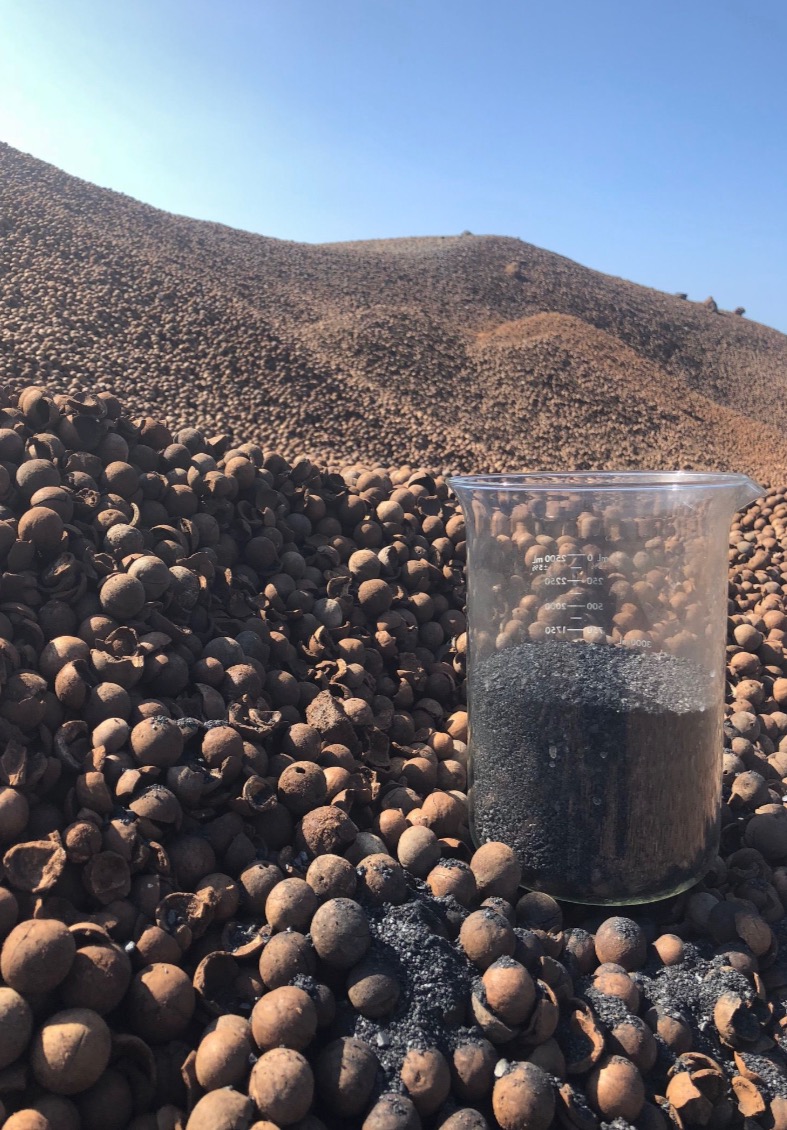
AgEnergy Hawaiʻi is the campus primary anchor tenant, operating with existing equipment and reactors already on site and taking advantage of an existing 15,000-ton macadamia nut shell feedstock stockpile at Kawaihae. Pyrolysis produces durable biochar plus condensable co-products and syngas that are returned to the campus rather than flared.

  • Existing reactors and equipment in place — fastest path to operation
  • 15,000 tons of macadamia nut shell feedstock already on site
  • Macadamia shell pyrolysis oils refined into wood vinegar and liquid smoke for nursery operations
  • A biodiesel cut from the pyrolysis oils blended with diesel at the cogen
  • Debarked woodchip from smaller logs — same quality and specification stream used by Hawaii Hardwoods
  • Syngas returned to cogen or kiln duty; heat recovered on-site
  • Biochar to Hawaii soil amendment, filtration and concrete admixture
  • Durable CDR credits with measurable, permanent carbon accounting
Beaker of finished macadamia nut shell biochar set among stockpiled macadamia shells at Kawaihae
AgEnergy Hawaiʻi — finished biochar drawn from the 15,000-ton macadamia nut shell stockpile already on site at Kawaihae.
05

Engineered Wood Products

Value-added materials

The newest pillar converts Big Island plantation eucalyptus into engineered wood. The primary product offering is plantation eucalyptus veneer for a premium plywood supply made for the islands — displacing imported panels — with LVL, glulam and mass-timber components as follow-on lines.

  • Peeled eucalyptus veneer as the primary product line
  • Premium plywood panels supplied to the Hawaiʻi island market
  • Plantation eucalyptus (E. grandis / saligna) on managed rotation
  • Log yard, peeling, veneer drying, layup and press lines on campus
  • Residual cores, chips and bark routed to biochar and cogen
  • Product carbon stored in Hawaii buildings for the structure's life
06

Mandeville Modular

Steel-frame modular manufacturing

Mandeville Modular joins the campus alongside primary anchor tenant AgEnergy Hawaiʻi, building a 60,000 sq ft manufacturing plant at Kawaihae. Their specialization is steel-frame construction — durable, code-resilient volumetric modules for housing, workforce accommodation, medical and commercial buildings, shipped complete out of the deep-draft harbor. Engineered wood products from Hawaii Hardwoods are a potential value-added resource within that steel-frame system.

mandevillemodular.com
  • 60,000 sq ft purpose-built manufacturing facility on campus
  • Co-located with the AgEnergy Hawaiʻi biochar operation
  • Core specialization in light-gauge and structural steel-frame modules
  • Campus CLT, glulam and LVL as a potential value-added hybrid component — floors, decks, panels and interior finish
  • Off-cuts and panel trim return to biochar and cogen feedstock
  • Modules staged dockside for interisland and Pacific-basin delivery

04 — Circulating loops

How the pillars connect

Energy loop
CogenerationKilns, presses, capture reboiler

Waste heat becomes the process energy for drying, pressing and solvent regeneration.

Fiber loop
Plantation eucalyptusEWP mill → residuals → biochar

Every ton of log entering the campus leaves as structure, char or energy — not waste.

Carbon loop
Flue gas + biomassCaptured CO₂, biochar, stored timber

Three distinct carbon sinks: recovered gas, durable char, and long-lived wood products.

Logistics loop
Kawaihae Deep Draft HarborInbound fuel / outbound product

Deep-water berth, laydown and rail-free short-haul keep intermodal cost low.

05 — Regenerative forestry

Forest-to-forest carbon cycle

Plantation eucalyptus from the Hāmākua Coast enters the campus as renewable feedstock and splits into two value streams. Biochar made from the residual stream returns to the very lands the trees came from — the forest helps rebuild itself.

Higher-value logs

Engineered Wood Products

  • Peeler logs for eucalyptus veneer
  • Premium plywood for the islands
  • LVL and laminated wood products
  • Glulam beams and structural timbers
  • Specialty building materials

Carbon stored for decades in buildings across Hawaiʻi and beyond.

Lower-grade material & residuals

Biochar Feedstock

  • Forestry thinnings
  • Small-diameter logs
  • Branches and tops
  • Sawmill residuals, bark and chips
  • Manufacturing offcuts

No waste stream — the same fiber becomes durable carbon removal.

Return to soil
  • Increased soil water retention
  • Improved soil structure
  • Enhanced nutrient retention
  • Greater drought resilience
  • Increased biological activity
  • Long-term carbon storage

The regenerative cycle

Forest → Lumber → Building Products

Forest Residuals → Biochar → Forest Soils

06 — Carbon logistics

Carbon capture & LCO₂ distribution hub

Captured carbon moves from compliance expense to revenue-generating product — one of Hawaiʻi's few local sources of industrial-grade liquid CO₂.

01

Post-Combustion Recovery

The 4.2 MW combined-cycle cogeneration facility captures CO₂ from its exhaust stream — captured, purified, liquefied and stored onsite.

02

Bulk Cryogenic Storage

Horizontal cryogenic tanks inside the industrial campus hold liquid CO₂, making Kawaihae a strategic carbon logistics hub for the state.

03

High-Density Dry Ice — Primary Offtake

The dominant LCO₂ offtake is high-density dry ice pellets and nuggets for food distribution, fisheries, medical transport, agriculture, interisland shipping and emergency response.

04

Revert Recovery — No Venting

Pelletizer flash vapor is captured by revert recovery and reliquified back into the LCO₂ loop instead of being vented, lifting yield per ton captured and keeping the utilization step near closed-loop.

05

ISO Container Filling & Greenhouse CO₂

Remaining volume moves in 20-foot ISO tank containers to interisland markets. Non-dry-ice utilization is directed to greenhouse agriculture as CO₂ delivered in aqueous solution — none of the offtake is offered for beverage service.

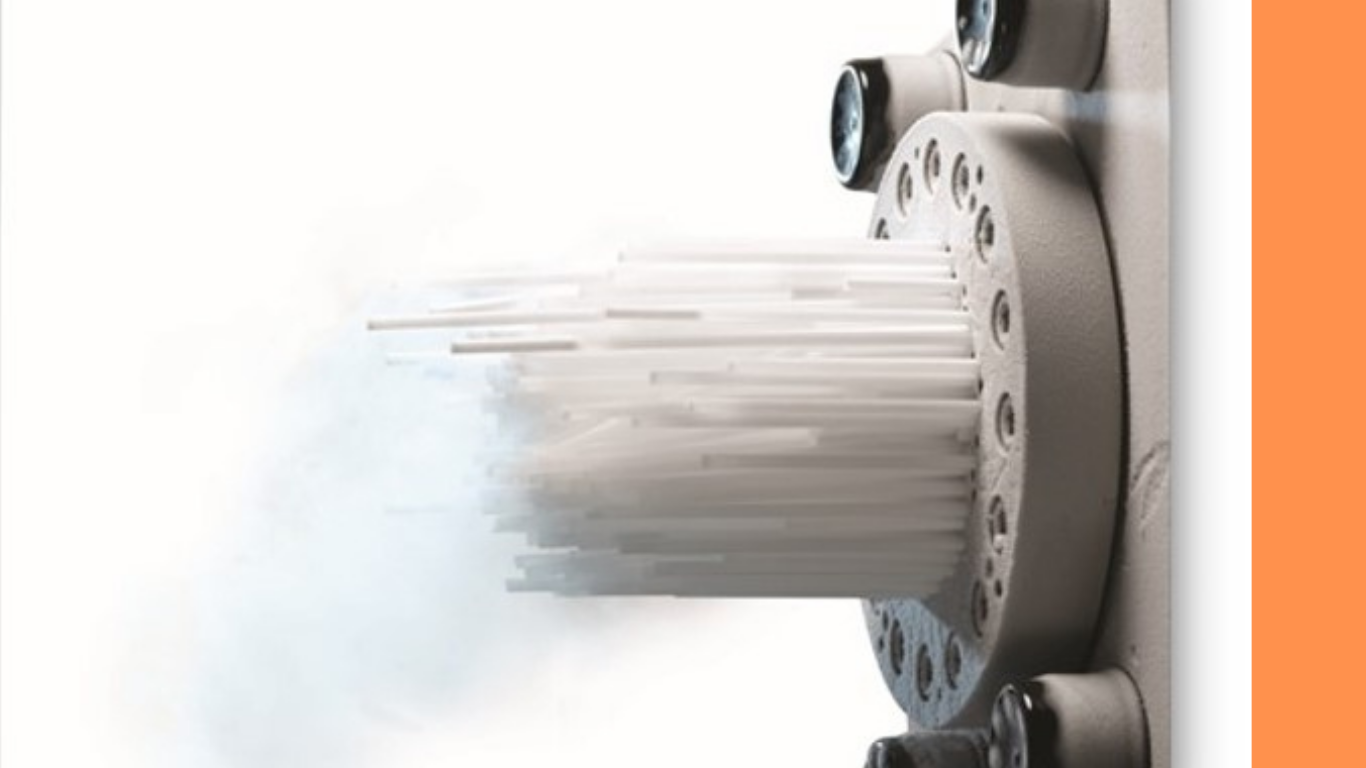
High-density dry ice pellets extruding from the pelletizer die head with CO₂ vapor at the face

Pelletizer · revert recovery

High-density pellets, captured vapor, nothing vented

Liquid CO₂ is extruded through the die head into high-density pellets and nuggets. The flash vapor that normally escapes at the die face is drawn back through revert recovery, reliquified and returned to the LCO₂ loop — more product per ton captured, and no working-loss emissions from the utilization step itself.

  • High-density pellets and nuggets as the primary offtake form
  • Die-face vapor recaptured and reliquified rather than vented
  • Balance of volume to greenhouse agriculture as aqueous CO₂
  • No beverage-grade supply from this campus

07 — End to end

The complete HI-CCSU campus story

  1. Carbon Smart Forestry

    Plantation eucalyptus cultivation

  2. Veneer & Premium Plywood

    Primary EWP line — long-lived carbon storage in island buildings

  3. Modular Manufacturing

    Mandeville Modular — 60,000 sq ft steel-frame plant, EWP as value-added component

  4. Manufacturing Residuals

    Wood waste and unusable material recovered

  5. Biochar Production

    Permanent carbon sequestration

  6. Forest Soil Enhancement

    Biochar returned to plantation lands

  7. Cogeneration Energy

    Power, steam and process heat for campus operations

  8. Carbon Capture

    Recovery of CO₂ from power generation

  9. LCO₂ Storage & Distribution

    Bulk storage, ISO tank filling, interisland transport

  10. High-Density Dry Ice

    Primary offtake · revert recovery reliquifies pelletizer vapor

  11. Hydrogen & Desalination

    Excess power supports future clean fuel and water production

08 — Positioning

The HI-CCSU Campus is a regenerative industrial ecosystem where Hawaiʻi-grown biomass is transformed into engineered wood products, renewable energy, durable carbon storage, liquid CO₂ commodities, hydrogen, and water resources. By integrating forestry, manufacturing, biochar production, cogeneration, carbon capture, and resource recovery into a single platform, the campus eliminates traditional waste streams while maximizing economic and environmental value. Carbon harvested from the forest is stored in buildings, residual biomass is converted into biochar and returned to the forest, and captured CO₂ becomes a marketable product for statewide distribution. The result is a circular infrastructure model that advances Native Hawaiian economic development, climate resilience, resource security, and industrial decarbonization for Hawaiʻi.

09 — Sequencing

Phased build-out

Phase 0

Baseline & Permitting

0–12 months

  • Emissions, water and cultural baseline studies
  • Chapter 343 / HRS environmental review pathway
  • Plantation inventory and sustained-yield modeling
  • Community and ʻohana consultation opened early
Phase 1

Cogen Optimization & Hydrogen Blend

12–30 months

  • Heat recovery build-out and steam header
  • Initial hydrogen receipt, storage and 15% blend
  • Biochar unit commissioned on existing residual streams
Phase 2

Carbon Capture & EWP Line

30–54 months

  • First capture train and CO₂ conditioning plant
  • Sawmill, kilns and lamination line commissioned
  • Residual routing between EWP, biochar and cogen closed
Phase 3

Full Integration

54+ months

  • High hydrogen blend to 100%-capable operation
  • Capture expanded across full flue duct
  • Merchant CO₂, biochar and mass-timber markets at scale

10 — Performance basis

Carbon

Net-negative

Capture + char + stored timber vs. residual stack emissions

Energy

4.2 MW sovereign

100% consumed by campus tenants, zero grid export

Fiber

Zero-waste mill

100% of log volume to product, char or energy

Local

Import displacement

Structural timber and fuel made in Hawaii, for Hawaii

11 — Shared layer

Governance, place & verification

Community & Cultural Stewardship

Kawaihae is a place of deep cultural significance. Consultation with lineal descendants, Native Hawaiian organizations and the Kohala community is a design input, not a compliance step — covering viewsheds, access, iwi kūpuna protocols and nearshore water quality.

Water & Marine Protection

Arid leeward siting means water is the binding constraint. Closed-loop cooling, condensate recovery from flue gas treatment, and zero process discharge to the nearshore reef are non-negotiable design bases.

Safety & Process Integrity

Hydrogen storage, solvent handling and pyrolysis each carry distinct hazard profiles. A single campus-wide HAZOP, unified emergency response with Hawaii County, and layered detection cover the combined footprint.

Measurement, Reporting & Verification

Independent MRV across all three carbon sinks. Continuous emissions monitoring on the stack, mass-balance accounting on char, and chain-of-custody on plantation fiber — one auditable ledger for the whole campus.

12 — Risk register

Principal risks & mitigations

Hydrogen blend performance & fuel cost

On-demand generation avoids stored-hydrogen inventory risk; the station runs on diesel at any blend ratio, so no step depends on a fixed hydrogen fraction.

CO₂ offtake market depth in-state

High-density dry ice pellets anchor the offtake, with greenhouse aqueous CO₂ as the second market; revert recovery reduces losses so volume is not exposed to beverage-grade demand.

Plantation yield & rotation timing

Sustained-yield model with residual-only fallback for biochar; EWP throughput sized below inventory growth.

Water availability on leeward Kohala

Closed-loop design plus flue-gas condensate recovery reduces make-up demand to a fraction of open-cycle equivalents.

Permitting and community acceptance

Early, continuous engagement; environmental review scoped for the integrated campus rather than pillar-by-pillar.